Casa / Notizia / Notizie del settore / Standard Perfume Bottle Sizes: A Full Breakdown
NOTIZIE

Standard Perfume Bottle Sizes: A Full Breakdown

Notizie del settore-

Quick Answer

The average size of a perfume bottle ranges from 30 ml to 100 ml, with 50 ml being the most common retail standard. Glass perfume bottles dominate the market, available in sizes from miniature 5 ml travel vials to luxury 200 ml or larger collector editions. The volume you choose affects price, portability, longevity, and shelf presence — and understanding the full size spectrum helps buyers, retailers, and manufacturers make smarter decisions.

Standard Perfume Bottle Sizes: A Full Breakdown

Perfume bottle sizes follow a well-established industry convention, though brands sometimes deviate for marketing or positioning reasons. Most glass perfume bottles sold globally fall into recognizable size tiers, each serving a different consumer need. Below is a comprehensive look at every common size tier and what it typically signals.

5–10 ml

Miniature & Sample Vials

These tiny glass perfume bottles are used primarily for samples, gift sets, and travel kits. A 5 ml bottle typically contains roughly 50–75 sprays, enough for about one to two weeks of daily use. Luxury houses like Chanel and Dior often release miniature sets featuring 5 ml or 7.5 ml sizes. The glass thickness in these bottles is proportionally thinner to reduce weight, though the stopper and spray mechanisms are identical in form to full-size versions.

15–30 ml

Travel & Starter Sizes

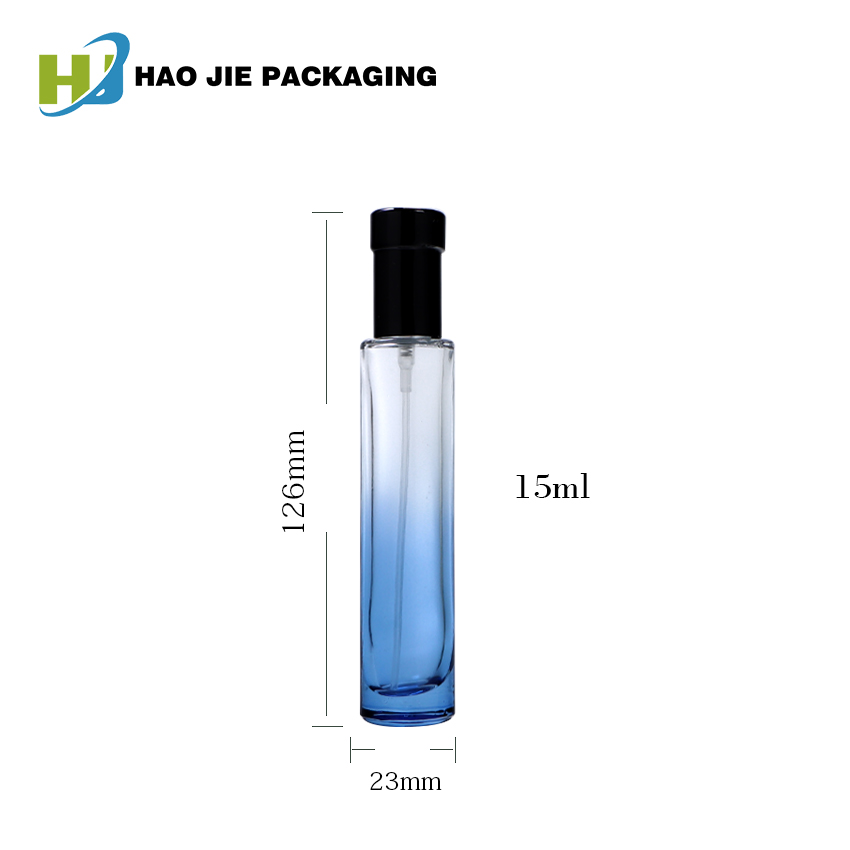
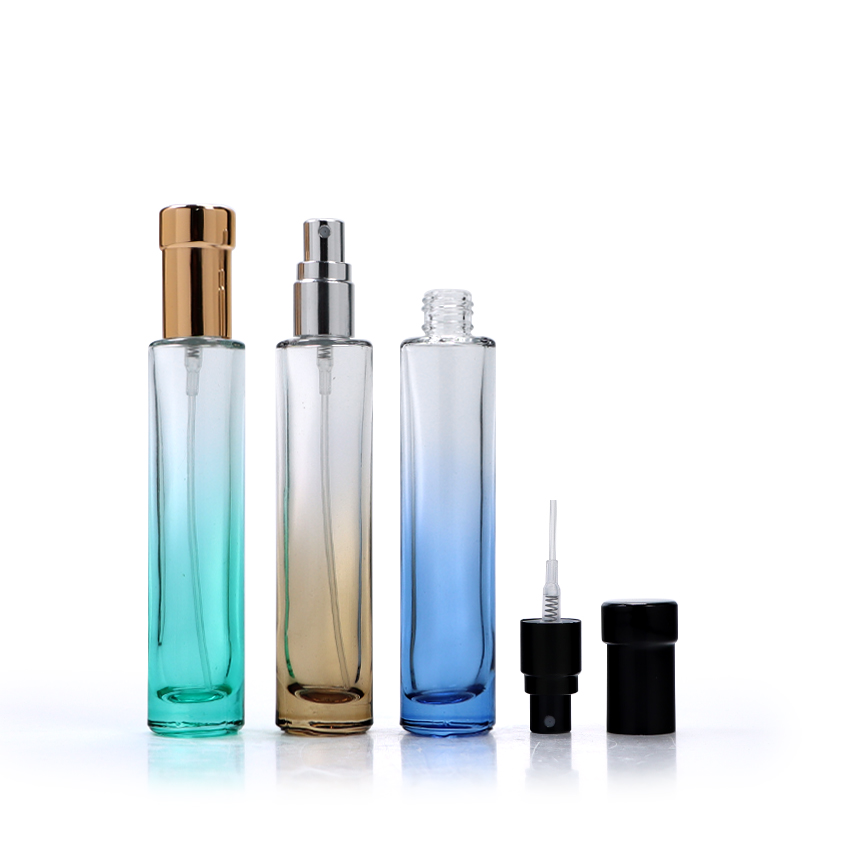
The 15 ml, 20 ml, and 30 ml glass perfume bottles are marketed heavily as travel-friendly options. A 30 ml bottle holds approximately 300–450 sprays, lasting a regular user three to four months. These are common in niche perfumery, where brands use smaller sizes to make expensive formulations more accessible. Many consumers buy 30 ml bottles first to test a fragrance before committing to a larger volume.

50 ml

The Market Standard

50 ml is the single most common perfume bottle size in the global market. It accounts for a significant portion of mid-range and designer fragrance sales. A 50 ml glass perfume bottle typically delivers 500–750 sprays and lasts the average wearer six to twelve months with daily use. The 50 ml format balances value, portability, and presentation — it fits comfortably in most vanity displays while remaining light enough for travel bags.

75–100 ml

Full-Size Consumer Bottles

The 75 ml and 100 ml glass perfume bottles represent the standard full-size offering for most designer and mass-market fragrances. A 100 ml bottle contains approximately 1,000–1,500 sprays — a year or more of use for most consumers. These sizes are also the most cost-efficient on a per-ml basis, which is why value-conscious buyers often prefer them. Bottles at this size tend to be heavier, with thicker walls and more elaborate caps, contributing to the premium feel brands aim for.

125–200 ml

Large Format & Collector Editions

Large-format glass perfume bottles at 125 ml, 150 ml, or 200 ml are typically reserved for signature fragrances, loyal users who want bulk value, or collector display purposes. Some luxury houses, including Guerlain and Jean Paul Gaultier, release iconic large-format editions that double as decorative objects. These bottles often feature heavier glass construction and decorative stoppers. They are rarely practical for travel but make a statement on a dressing table or shelf.

Size (ml) Approx. Sprays Avg. Duration (Daily Use) Common Use Case
5–10 ml 50–100 1–2 weeks Samples, Gift Sets
15–30 ml 150–300 1–3 months Travel, Niche Fragrances
50 ml 500–750 6–12 months Standard Retail (Most Popular)
75–100 ml 750–1,500 12–18 months Full-Size, Value Purchases
125–200 ml 1,500–2,500 18–36 months Collectors, Signature Scents
Common perfume bottle sizes, spray estimates, and typical use duration

Why Glass Perfume Bottles Remain the Industry Standard

Glass has been the primary material for perfume bottles for centuries, and the reasons go beyond tradition. The material properties of glass make it uniquely well-suited to housing fragrance, both technically and aesthetically. Understanding why glass perfume bottles dominate the market — even as plastic and aluminum alternatives exist — helps explain how bottle size decisions intersect with material choices.

Chemical Inertness: Glass does not react with fragrance compounds. Alcohol-based perfumes contain volatile aromatic molecules that can interact with materials like certain plastics over time, potentially degrading the scent. Glass provides a completely neutral environment, which is why high-end fragrance houses exclusively use glass perfume bottles for their formulations. The larger the bottle, the more important this stability becomes, since the fragrance will sit in the bottle for a longer period.

Impermeability: Glass has zero vapor transmission rate, meaning no fragrance evaporates through the walls. Plastic bottles, even high-quality ones, allow trace amounts of volatile compounds to escape over time. For collectors or consumers who buy large-format bottles expecting to use them over one to two years, glass ensures the fragrance remains stable and unchanged from opening to the final spray.

UV Protection Options: Many glass perfume bottles use colored glass — amber, dark violet, or frosted clear — specifically to filter ultraviolet light. UV exposure degrades many aromatic compounds, particularly citruses, florals, and delicate musks. Colored or UV-treated glass is a passive preservation method built into the bottle design itself, with no added cost to the user.

Design Versatility: Glass can be molded, pressed, cut, etched, sandblasted, lacquered, and decorated in ways that plastic and metal cannot match. This versatility is why glass perfume bottles come in such an enormous range of shapes and aesthetic treatments — from purely geometric forms to sculptural art objects. A glass bottle's visual identity is often as important a purchase factor as the fragrance inside it.

Weight and Perceived Quality: Heavier glass correlates with perceived luxury in the consumer's hand. A 100 ml glass perfume bottle with thick walls and a weighted base communicates quality before the bottle is even opened. Manufacturers carefully calibrate glass thickness, base weight, and neck proportions to hit a specific tactile feeling that matches the brand's positioning. This is one reason larger bottles often feel more premium — their greater glass volume contributes real weight.

Chemically Inert
Zero Vapor Loss
UV Filterable
Infinitely Shapeable
Premium Tactile Feel
Recyclable Material

Physical Dimensions of Glass Perfume Bottles by Volume

Volume (ml) tells you how much liquid a glass perfume bottle holds, but the physical dimensions — height, width, and diameter — determine how the bottle looks and fits. These two measures are not always proportional. A tall, narrow 50 ml bottle and a short, wide 50 ml bottle hold the same amount of perfume but occupy different amounts of shelf space and carry entirely different aesthetic personalities. Below are typical physical dimensions for common glass perfume bottle sizes.

30 ml
  • Height: 70–90 mm
  • Width: 35–50 mm
  • Neck Diameter: 13–18 mm
  • Glass Weight: 60–100 g
50 ml
  • Height: 85–105 mm
  • Width: 45–60 mm
  • Neck Diameter: 15–20 mm
  • Glass Weight: 90–150 g
100 ml
  • Height: 100–130 mm
  • Width: 55–75 mm
  • Neck Diameter: 15–22 mm
  • Glass Weight: 130–220 g
200 ml
  • Height: 130–180 mm
  • Width: 65–90 mm
  • Neck Diameter: 18–25 mm
  • Glass Weight: 200–350 g

These ranges reflect typical mass-market and designer glass perfume bottle production. Custom shapes — particularly those with wide, flat flanges or heavily sculpted forms — may fall outside these proportions. Neck diameter is especially important because it determines which atomizer and collar systems are compatible, a critical factor in manufacturing and refillable bottle designs.

Glass Perfume Bottle Shapes and What They Communicate

Shape is arguably the most powerful visual element of a glass perfume bottle. Consumers make immediate judgments about a fragrance's character — its gender positioning, price tier, scent family, and brand values — based on the bottle's silhouette alone, before smelling a single molecule. Fragrance houses invest heavily in bottle shape development because the shape functions as a continuous ambassador on every dresser and retail shelf where it sits.

Rectangular / Cube
The most common form for modern designer fragrances. Clean, stackable, efficient to produce, and versatile across gender categories. Calvin Klein CK One and Davidoff Cool Water use rectangular glass bottles. The form reads as modern and minimalist.
Round / Oval
Feminine associations, softer positioning. Round glass perfume bottles are prevalent in floral, powdery, and romantic fragrance categories. They are ergonomically comfortable in the hand and often feature a slight flare or taper at the base. Guerlain's Shalimar uses a distinctive oval form.
Figurative / Sculptural
Shaped glass perfume bottles — human torsos, shells, teardrops, animals — are used for novelty, collector, and prestige positioning. Jean Paul Gaultier's male torso bottle is among the most recognized. These forms require specialized glass-pressing or hand-blowing techniques and are significantly more expensive per unit than geometric forms.
Faceted / Cut-Glass Look
Pressed glass with geometric facets mimics cut crystal. This technique is used extensively in high-end and oud-based fragrances, particularly in Middle Eastern perfumery. Faceted glass perfume bottles catch and refract light, creating visual interest on display. Baccarat and similar crystal suppliers produce ultra-premium versions of this style.
Flacon / Classic Pillow
The traditional "flacon" shape — a broad, slightly compressed ovoid — is most associated with vintage and heritage fragrances. Chanel No. 5's pillow bottle is the archetype. The form signals tradition, elegance, and longevity. Brands with long heritage often retain or revisit this silhouette to anchor their identity.

How Glass Perfume Bottles Are Manufactured: Process and Quality Factors

Most glass perfume bottles are produced by one of two primary methods: machine-pressed glass molding (for high-volume, standard shapes) or mouth-blown and hand-finished glass (for bespoke and ultra-luxury applications). Understanding the production process helps brands, buyers, and sourcing professionals evaluate quality claims and set realistic expectations.

01

Raw Material Preparation

The primary ingredients for perfume bottle glass are silica sand (SiO2), soda ash (Na2CO3), limestone (CaCO3), and cullet (recycled glass). Clear glass for perfume bottles typically uses low-iron silica to achieve maximum transparency. Colored glass — amber, cobalt, violet — involves adding metal oxides: iron for amber, cobalt for blue, manganese for violet. The batch is mixed to precise formulas before melting.

02

Melting and Forming

Raw materials are melted in furnaces at approximately 1,400–1,600°C. For machine-pressed bottles, molten glass is gob-fed into molds at precisely controlled temperatures and pressed to shape. For blown glass, molten glass is gathered on a blowpipe and either mouth-blown or machine-blown into a mold. Pressed glass is denser and more uniform; blown glass allows for thinner walls and subtler organic variation, which is valued in artisan and prestige applications.

03

Annealing

Freshly formed glass bottles pass through a controlled cooling tunnel called a lehr, where temperature is gradually reduced from around 550°C to ambient over 30–90 minutes depending on wall thickness. This annealing process relieves internal stress in the glass that would otherwise cause spontaneous cracking. Improperly annealed glass perfume bottles are fragile and may crack under handling, temperature changes, or internal pressure from the spray mechanism.

04

Decorating and Finishing

After forming and quality inspection, glass perfume bottles receive their decorative treatments. These may include: lacquering or spray-coating for color; screen printing or pad printing for logos and text; hot-stamping with metallic foils; sand-blasting for frosted effects; UV coating for surface protection; and acid etching for subtle texture. Each decorating method adds cost and production time. Screen-printed decoration is the most durable; paper labels are the least durable but most economical.

05

Assembly and Quality Control

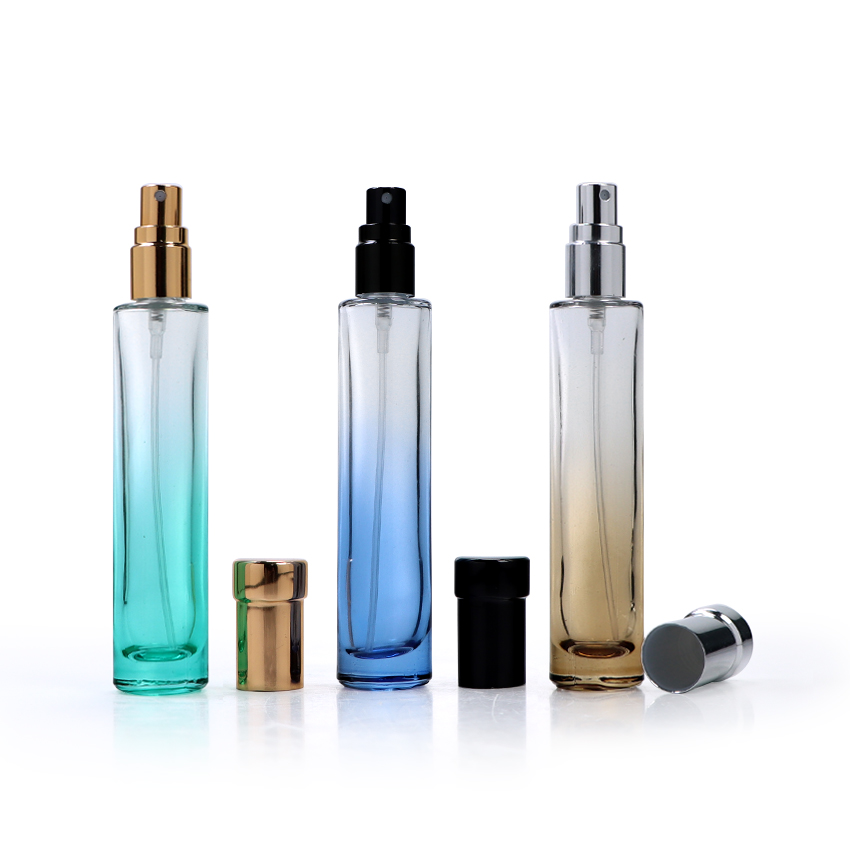
Finished bottles are fitted with atomizer mechanisms (pump sprayers), collars, and caps. The collar — the decorative ring between bottle neck and cap — is typically aluminum or zinc alloy and is a primary area of customization. Quality control checks at this stage include leak testing, spray uniformity testing, neck thread accuracy, and visual inspection for bubbles, inclusions, or warping. Industry-standard rejection rates for premium glass perfume bottles typically run between 1% and 3% of production.

Choosing the Right Glass Perfume Bottle Size: A Buyer's Decision Guide

Whether you are a consumer selecting a new fragrance, a brand planning a product line, or a procurement manager sourcing glass perfume bottles for private label production, the size decision involves more variables than it first appears. Here is a structured approach to the decision.

For Consumers

  • If trying a new fragrance for the first time, choose 30 ml or smaller. Scent preferences change, and a large bottle of a fragrance you grow tired of represents wasted money.
  • For a signature scent you wear daily, the 100 ml glass perfume bottle offers the best value per ml in most designer lines.
  • Consider fragrance stability. Fresh citrus and green fragrances have shorter lifespans once opened (12–18 months optimal). Buying a 200 ml bottle of a fragrance with low tenacity means you may notice quality degradation before you finish it.
  • For travel, 30 ml glass bottles or refillable atomizers filled from your primary bottle are the practical choice. Most airline regulations limit liquid containers to 100 ml in carry-on luggage.

For Brands and Retailers

  • Launching with a 30/50/100 ml range covers the widest consumer price bracket and maximizes trial-to-loyalty conversion.
  • A well-designed glass perfume bottle at 50 ml is the most photographed, gifted, and social-media-shared format. Invest design budget here.
  • Minimum order quantities (MOQs) for custom glass perfume bottles typically start at 3,000–5,000 units per size with custom molds, and 500–1,000 units for stock mold customization. Larger size ranges spread tooling costs.
  • Consider shipping weight and carton efficiency. A 100 ml glass perfume bottle weighs roughly three to four times what a 30 ml version weighs. Freight costs per unit increase with size, a factor brands often underestimate in initial margin calculations.

For Sourcing Professionals

  • Standardized sizes (30, 50, 100 ml) offer the widest supplier base and lowest tooling costs. Custom sizes require new mold investment, typically USD 3,000–12,000 per mold depending on complexity.
  • Wall thickness specification is critical. Specify minimum wall thickness (typically 3–5 mm for luxury glass perfume bottles) to ensure durability and prevent breakage during shipping.
  • Neck finish standardization (FEA 15, FEA 18, FEA 20 collar sizes) ensures your chosen pump mechanism fits reliably across production batches without individual adjustment.
  • Request samples at production weight before final order confirmation. Bottle weight often changes between prototype and mass production due to mold adjustments, and even small weight differences affect carton dimensions and shipping costs.

How Bottle Size Influences Perceived Value and Pricing

The relationship between glass perfume bottle size and price is not linear. Larger bottles are almost always cheaper per milliliter, but that per-ml saving must be weighed against other factors. Understanding the pricing dynamics helps both buyers and sellers position sizes effectively.

In a typical designer fragrance line, the 30 ml version might retail at roughly USD 60, the 50 ml at USD 80, and the 100 ml at USD 110. This means the per-ml cost drops from USD 2.00 (30 ml) to USD 1.60 (50 ml) to USD 1.10 (100 ml). The brand captures the per-ml saving partly as margin and partly passes it to the consumer, which is why the 100 ml bottle is perceived as the best value while still being the highest absolute price item.

However, the glass bottle itself is not the dominant cost in most fragrances. The fragrance liquid, filling, and packaging typically represent 50–70% of production cost. The glass perfume bottle itself represents 15–25% depending on the bottle's complexity and weight. This is why a more elaborate glass perfume bottle design (heavier, more decorated) raises the product's overall perceived quality at a cost increase that is disproportionately small relative to its impact on consumer perception.

From a consumer psychology standpoint, the glass bottle's physical weight, texture, and acoustic properties (the sound of the cap) all influence willingness to pay. Studies in consumer packaging research have shown that identical fragrances placed in heavier glass bottles consistently receive higher quality ratings from test panels. The bottle is not just a container — it is an active part of the product's sensory experience.

The Gifting Premium: Why 50 ml Dominates Gift Sets

Gift-giving is one of the primary purchase occasions in the fragrance category, accounting for a substantial portion of holiday quarter sales. The 50 ml glass perfume bottle is the preferred gift size for several interconnected reasons: it is substantial enough to feel generous, fits comfortably in gift boxes, and sits at a price point that most gift-givers find accessible without feeling cheap. Brands have recognized this and often produce exclusive decorative finishes — gold lacquer, flocked surfaces, limited cap designs — available only in the 50 ml format. This creates additional scarcity and collectibility around the most commercially dominant size.

Glass Perfume Bottles vs. Other Packaging Materials: A Detailed Comparison

While glass perfume bottles dominate the prestige and mainstream fragrance market, alternative materials exist and serve specific niches. Understanding how glass compares helps clarify why the material holds its position and where alternatives are genuinely appropriate.

Property Glass PET Plastic Aluminum Crystal (Baccarat-type)
Chemical Inertness Excellent Good (short-term) Good (lined) Excellent
Fragrance Preservation Excellent Moderate Good Excellent
Design Flexibility Very High High Moderate High (limited shaping)
Weight (relative) Heavy Light Light-Medium Heavy
Cost (relative) Medium Low Medium-High Very High
Perceived Luxury High Low Medium Very High
Recyclability 100% (infinite) Downcycles 100% (infinite) 100%
Comparison of perfume bottle materials across key properties

The data in the table reflects why glass remains the preferred material despite being heavier and more fragile than alternatives. Its combination of chemical inertness, design flexibility, perceived luxury, and full recyclability creates a value proposition that no current alternative fully replicates. PET plastic is primarily used for mass-market body sprays and lower-cost fragrances where price sensitivity outweighs presentation.

Custom Glass Perfume Bottles: From Concept to Production

For brands seeking differentiation, custom glass perfume bottle development is an investment with significant returns. A distinctive bottle shape functions as three-dimensional branding that is difficult for competitors to replicate without obvious imitation. Here is a realistic overview of the custom development process.

Design Phase

The custom glass perfume bottle development process begins with concept sketches and 3D CAD renderings. At this stage, designers must account for glass-specific constraints: minimum wall thickness (typically 3 mm for functional areas, 5 mm+ for structural areas), draft angles for mold release (usually 1–3 degrees on vertical surfaces), and neck finish compatibility with standard atomizer systems. Industrial designers experienced in glass manufacturing will identify draft and undercut issues early, preventing expensive mold revisions later.

Prototyping

Before steel mold fabrication, most glass perfume bottle development projects use resin or CNC-machined aluminum prototypes to evaluate shape, proportion, and hand-feel. Some suppliers offer 3D-printed glass prototypes using specialized techniques, though these differ in surface quality from production glass. Prototype evaluation typically takes two to four weeks. Brands should use prototypes to photograph the bottle with fragrance liquid inside to evaluate how the liquid color, clarity, and fill level look in the specific glass type selected.

Mold Fabrication and Sampling

Steel molds for glass perfume bottles are machined to tight tolerances, typically +/- 0.1 mm on critical dimensions. Mold lead time is 60–90 days at most manufacturers. Initial production samples (typically 200–500 units) allow brands to evaluate real glass quality, surface finish, weight consistency, and decoration accuracy. This is the stage where most issues are identified and corrected before full production commitment. Budget two to three rounds of sampling for complex bottle shapes — first samples rarely match the final specification on all criteria simultaneously.

How to Store Glass Perfume Bottles Properly

The size and type of a glass perfume bottle affects how it should be stored. Improper storage is one of the most common reasons fragrances degrade prematurely. The following guidance applies across all glass perfume bottle sizes.

Away from Light

UV and visible light accelerate the oxidation of fragrance molecules. Clear glass perfume bottles are particularly vulnerable; amber or frosted glass provides natural protection. Store clear glass bottles in their original box or a dark cabinet. The larger the bottle (and thus the longer you will be using it), the more important light protection becomes.

Stable Temperature

Temperature fluctuations cause thermal expansion and contraction in the liquid, which can degrade volatile top notes over time. The ideal storage temperature for most fragrances is 15–20°C (59–68°F). Bathrooms, despite being a common storage location, experience significant temperature and humidity swings that are unfavorable for fragrance preservation. A bedroom dresser away from heat sources is preferable.

Upright Position

Store glass perfume bottles upright, not on their side. When a bottle lies horizontally, the fragrance is in prolonged contact with the atomizer seals and pump components. Over time, this can cause degradation of rubber and plastic seal materials, leading to leaks or pump failure. This is especially important for large-format glass perfume bottles that may sit in storage for extended periods.

Original Packaging

The outer box of a glass perfume bottle is not just decorative — it provides light blocking, physical protection, and in some cases humidity buffering. Keeping bottles in their original cartons when not in active display use extends fragrance life significantly, particularly for collector editions stored long-term.

Frequently Asked Questions About Perfume Bottle Sizes and Glass Perfume Bottles

What is the most common average size perfume bottle?
The 50 ml glass perfume bottle is the most common size in the global fragrance market. It is the most widely stocked size across department stores, duty-free retailers, and online platforms. The 50 ml format is also the most common gift-giving size. However, 100 ml is the most popular size for regular consumers purchasing for personal use due to its lower per-ml cost.
How many sprays does the average perfume bottle size contain?
Each spray from a standard perfume atomizer delivers approximately 0.07–0.10 ml of liquid. This means a 50 ml glass perfume bottle contains roughly 500–700 sprays, a 100 ml bottle contains approximately 1,000–1,400 sprays, and a 30 ml bottle yields about 300–430 sprays. The exact count varies depending on atomizer design, pump mechanism type, and liquid viscosity.
Why are most perfume bottles made of glass rather than plastic?
Glass perfume bottles are preferred because glass is chemically inert and does not interact with fragrance compounds, ensuring the scent remains stable throughout the product's life. Glass also has zero vapor transmission, meaning no fragrance evaporates through the bottle walls. Additionally, glass can be molded into an enormous variety of shapes and decorated with precision, making it the ideal material for brand expression. Plastic alternatives are used in mass-market body sprays but are rarely used for quality fragrance products.
What does the size of a perfume bottle tell you about the fragrance?
Bottle size alone is not a reliable indicator of fragrance quality, but it does carry signals. Very small bottles (under 15 ml) are typically samples, gift inclusions, or extremely concentrated extraits de parfum where a tiny amount is sufficient. Very large bottles (over 100 ml) are most commonly used for popular, everyday fragrances where consumers want long-term value. Mid-range sizes (30–50 ml) dominate niche perfumery because they make expensive formulations accessible. Size also correlates with price bracket — a brand launching a 200 ml bottle is signaling it expects consumers to commit to heavy use of that fragrance.
How heavy should a quality glass perfume bottle be?
A 50 ml quality glass perfume bottle (empty, without liquid or cap) typically weighs between 90 and 150 grams. A 100 ml bottle typically weighs between 130 and 220 grams. Heavier glass correlates with thicker walls, which means more durability and a premium tactile feel. However, excessive weight is not always better — the optimal weight balances perceived quality with practical shipping and handling costs. Custom glass perfume bottle specifications should include a target weight range, not just a volume, to ensure consistency across production batches.
Can perfume bottles be refilled?
Yes, glass perfume bottles can be refilled, and an increasing number of luxury brands offer formal refill programs. Bottles designed for refilling typically have wider necks or specialized valve systems. Standard retail glass perfume bottles with pump sprayers can also be refilled by removing the spray mechanism and using a small funnel or syringe. The key advantage of using the original glass bottle is its chemical inertness — unlike decanting into plastic containers, refilling a glass perfume bottle does not affect fragrance composition.
What is the minimum order quantity for custom glass perfume bottles?
Minimum order quantities (MOQs) for custom glass perfume bottles vary by supplier and design complexity. For stock mold glass perfume bottles with custom decoration (printing, lacquer), MOQs typically start at 500–1,000 units. For fully custom glass perfume bottles with new mold fabrication, MOQs are generally 3,000–5,000 units per size, as mold costs must be amortized over a sufficient production volume to remain economically viable. Some specialty manufacturers serve small brands with lower MOQs of 300–500 units on custom designs, though at a higher per-unit cost.
Does the shape of a glass perfume bottle affect fragrance preservation?
Bottle shape influences fragrance preservation primarily through the neck-to-volume ratio. Bottles with wider necks relative to their volume expose more fragrance surface area to air each time the bottle is opened, increasing oxidation rate. Tall, narrow-necked glass perfume bottles are therefore slightly better for long-term fragrance preservation in partial bottles. The practical difference for a bottle used within one to two years is small, but for collectors storing sealed bottles long-term, a narrow-neck design offers a marginal advantage. Bottle color (UV-blocking glass) has a much more significant impact on preservation than shape.
What is the standard neck finish for glass perfume bottles?
The most widely used neck finish standards in the global perfume bottle industry are FEA 15 (15 mm inner diameter, used for most standard spray mechanisms), FEA 18 (18 mm, used for larger pump atomizers), and FEA 20 (20 mm, used in some luxury and large-format applications). FEA 15 is by far the most common in standard retail glass perfume bottles. Matching the neck finish to a compatible pump and collar system is essential for leak-free assembly and reliable spray performance.
How long does perfume last in a glass bottle once opened?
Most fragrances remain at good quality for 12–36 months after opening when stored correctly in a glass perfume bottle. Fresh fragrance families (citrus, green, aquatic) tend toward the shorter end of this range, while oriental, woody, and chypre fragrances are generally more stable. The key degradation factors are UV light exposure, temperature fluctuation, and oxidation from air contact each time the bottle is opened. A sealed, unopened glass perfume bottle stored in cool, dark conditions can retain quality for 5–10 years or longer for most fragrance compositions.